HPE – Your Brain, unpacked

Welcome to Friday y’all – congrats on getting through the first week back in these strange and challenging COVID-19 times. As part of our HPE work this semester, and given quite a few of you are interested in how our minds work I thought we could begin by spending some time focusing on the brain. Up front, lets look at achievement standards…

Yr 7/8:  students evaluate strategies and resources to manage changes and transitions and investigate their impact on identities. They analyse factors that influence emotional responses.

Yr 9/10:  students critically analyse contextual factors that influence identities, relationships, decisions and behaviours. They evaluate the outcomes of emotional responses to different situations.

Key outcomes: Ya’ll can give me some info on the brain – names of parts, how they work, what they do…

So lets kick off:

Discussion Time: Who’s heard of any parts of the brain before – anyone have any idea’s what they do?

Some parts of the brain, including the cerebellum and brain stem, are quite primitive. They help us coordinate our movements and control basic survival functions like breathing.

And then there’s the cerebrum—the biggest and most evolved part of the brain. It controls the body’s conscious experiences and voluntary movements. It allows us to feel, think and create. And to receive, store and retrieve memories. In short, it makes us human.

Imagine you have a brain in your hand and slice it down the middle. What you’re left with are the two hemispheres of the cerebral cortex. Each of the hemispheres contains four lobes: the frontal, temporal, parietal and occipital lobes. These lobes are specialized to do certain things. For example, the frontal lobe specializes in decision making, while the occipital lobe specializes in vision. In addition to the lobes, there are deeper structures in the brain like the limbic system, which is important to long-term memory. (You can roll your mouse over the picture of the brain above to find out more about the parts of the brain.)

Neurons

Every part of the brain—and the rest of the nervous system, for that matter—contain neurons (more than 100 billion of them in all). Neurons are nerve cells with some very special properties. Each one has dendrites that gather information transmitted from other cells, and an axon that transmits information to other cells. The average neuron communicates with between 1000 and 10,000 other cells.

The information that your neurons transmit comes from many sources. Let’s use a finger touch as an example. When you touch something with your finger, nerve impulses immediately “fire” from your finger, to your brain. These impulses travel from one neuron to the next astonishingly quickly. Once in the brain, the information contained in these impulses is deciphered, with the result that you can identify what you touched.

Say you touch something without looking at it. Your brain will check: Was what you touched cold? hot? wet? soft? hard? slick? rough? and so on. These answers will enable it to compare features of what you touched with things you have touched in the past: water, skin, glue, metal, sand, bananas, tree bark, whatever. It will use these comparisons to determine what it most likely touched.

So – how do different things effect our brains? Lets take a look:
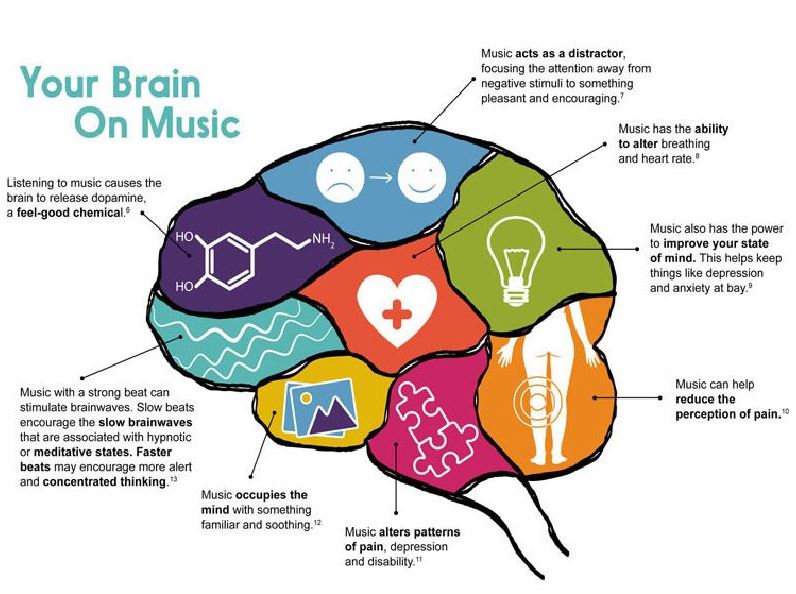
Task for Growing understanding:

  • Create a List of 5+ functions of the brain
  • Can you list the area’s of the brain? What are there functions – summarise in your own words.
  • How can stress impact our brain and how does this effect us in our day-to-day lives?
  • How might the brain assist us in new experiences?
  • Take some time (approx. 20mins) to explore links between this information and your passion projects. Utilize the mind map resource to unpack connections.

Revision of Operations

This week is ensuring you know key terms and revising the four operations and their uses in many situations.

The achievement standards: Students use efficient mental and written strategies to carry out the four operations with integers.

Firstly, what is an integer? How is it different to a whole number or natural number? What on earth is a rational or irrational???

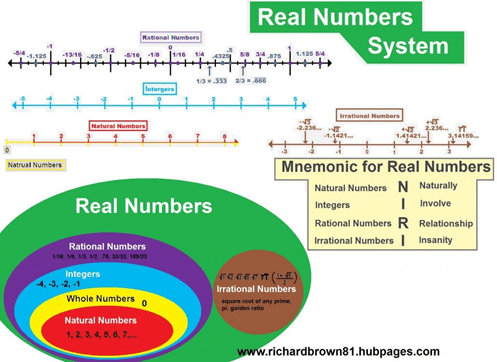
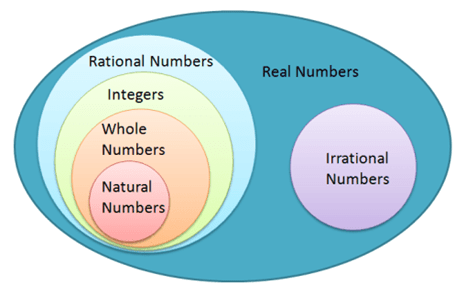
Lets review (or introduce) the ‘real number system’

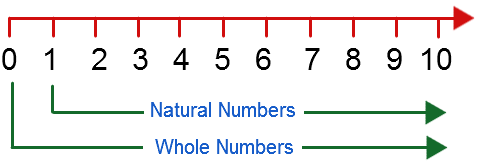
Natural Numbers: all positive whole numbers 1 and above.  

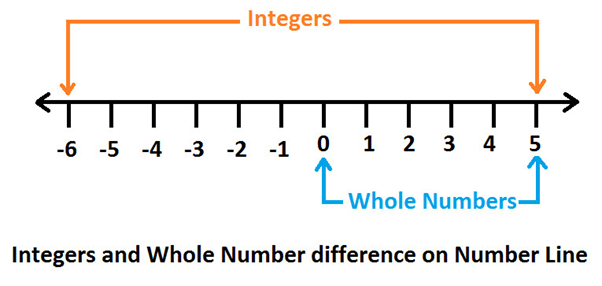
Whole Numbers: all positive whole numbers including zero.

Integer: is a whole number which can be positive and negative (no fractions or decimals)

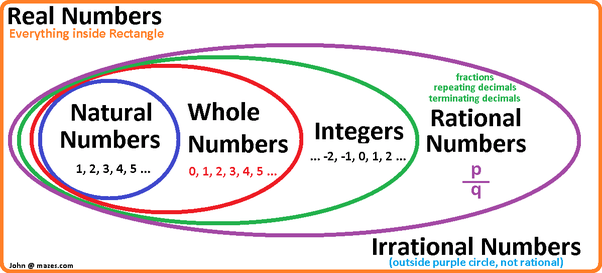
Rational numbers: any number which can be written as a fraction where top and bottom are integers and bottom cannot be 0.

Irrational Numbers: cannot be written as a fraction

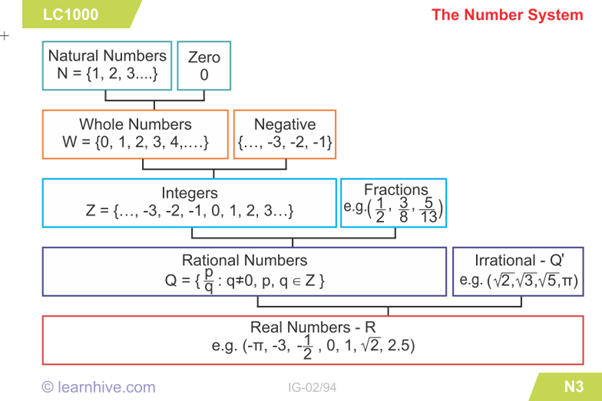
Real numbers: all fractions, decimals, positive and negative numbers

Some good diagrams of the above info:

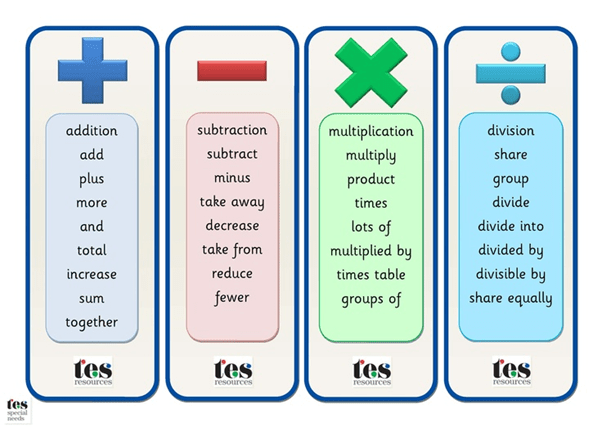
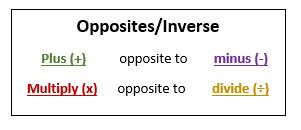
Now we have reviewed number terminology, what are the 4 operations???

We want to know how comfortable you are with these and whether you know strategies to do them without a calculator, so think about the following questions:

  1. Do you know how to add large whole numbers without a calculator? Eg 1689 + 2358
  2. Do you know how to subtract large whole numbers without a calculator? Eg 5987-625
  3. Can you add decimals and/or fractions without a calculator?
  4. Can you subtract decimals and/or fractions without a calculator?
  5. Do you know how to multiply whole numbers without a calculator?
  6. Do you know how to divide whole numbers without a calculator?
  7. Can you multiply decimals and/or fractions without a calculator?
  8. Can you divide decimals and/or fractions without a calculator?
  9. Can you do the above with a calculator?
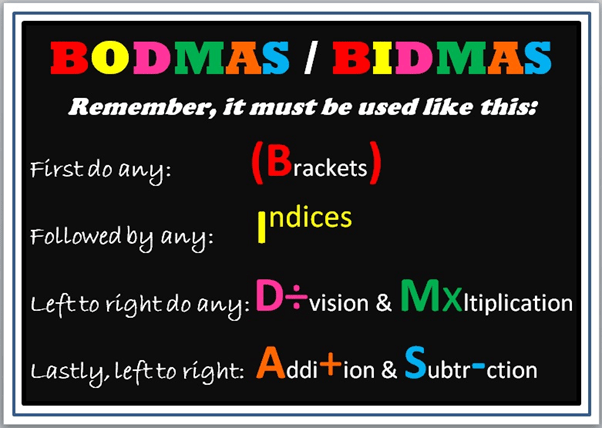
  10. Do you know order of operations?

The goal for today is to figure out the answers to the above for each of you so we can cater the work to you!

To help us, you will be completing a worksheet, some of you may find this easy, some may find it hard (or a mixture).

Term 2 – Week 1: Chernobyl cause and effect

Historical SkillsHistorical Knowledge
Academic standardYear 9: Analyse the causes and effects of events and developments and make judgements about their importanceYear 10: Analyse the causes and effects of events and developments and explain their relative importance.Academic standardThe environment movement (the 1960s – present) – Significant events and campaigns that contributed to popular awareness of environmental issues

What does that mean? 

undefined

In everyday words

  • Cause: a thing that gives rise to an action, phenomenon, or condition “The cause of the accident is not clear”
  • Effect: a change which is the result or consequence of an action “The accident had the effect of Government changing the speed limit in this area”
  • Cause and effect: explain why things happened the way they did
  • Judgement: the ability to make considered decisions or come to sensible conclusions

So, cause and effect help us, as historians, explain why things happened the way they did and what influence those events had on the world.  

You might be saying to yourself … “but Adam, I am not a Historian, History is boring”. If you tell informative stories about things that happen to yourself or your friends/family then you are a historian. If you’ve ever watched a movie or a show on Medieval Warfare and thought “cool” then you are a historian.

Judgement (and also “explaining their relative importance”) is about how we as narrators of history can make considered decisions about the history and tell meaningful and useful stories to inform and educate others.

In context to Historical Knowledge:

Chernobyl

  1. https://www.youtube.com/watch?v=DDBkMIwb9Mk
  2. https://www.youtube.com/watch?v=3azNLCo0wyU
  3. https://www.youtube.com/watch?v=IzbOgvWQhHA

Practice makes perfect

  • Grab a Chromebook to research Chernobyl
  • Find at least 1 video which explains the causes and effects. This may need to be two (or more) videos
  • Find at least important 5 causes to the Chernobyl reactor accident and important 5 effects. Each cause and effect should be descriptive enough to educate a layperson and its importance should be evident. 

Example

Cause: The reactors were highly unstable at low power, due to control rod design and “positive void coefficient,” factors that accelerated the nuclear chain reaction and power output if the reactors lost cooling water.

Effect: Soviet authorities started evacuating people from the area around Chernobyl within 36 hours of the accident. In 1986, 115,000 people were evacuated. The government subsequently resettled another 220,000 people.

Upload this work to your Wabisabizen portal (do we know how to do this yet?)

What is an Audience?

An audience is a person – or group of people – reading a text, listening to a speech, or watching something, eg an advertisement or film.

When writing a text, authors imagine an ideal reader – someone who will respond in a way that achieves the purpose of the writing. AKA a Target Audience.

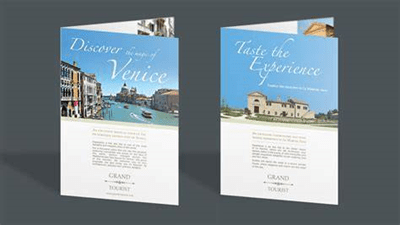
e.g. someone who visits a place of interest after reading a tourist guide designed to inform and encourage them to visit.

Texts appeal to an intended target audience,

e.g. a piece about ‘make-up’ is intended for teens.

Texts can also have more than one specific audience,

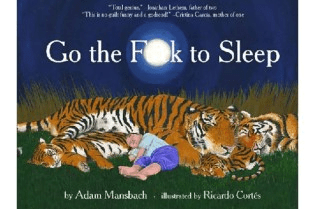
e.g. children’s stories are for children but must also appeal to the adults who will buy them.

 Writers make sure their writing speaks to their target audience by adapting:

Language – simple for younger children, colloquial language for teens and special terminology for academics etc

Style – a chatty, informal style appeals to young adults, as well as older readers if the text is light-hearted whereas a formal style suits serious or academic topics.

Layout and organisation – layout will focus the audience’s attention on important parts of the text, gradually guiding them through the ideas,

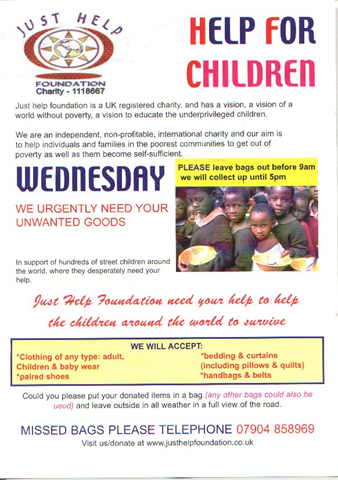
eg a charity leaflet may begin with a focus on the problems and why the reader should donate – and then end with how to donate.

Analysis

You can tell an intended audience by looking at:

  • The content – who is interested
    • Eg a detailed and highly technical article about bike maintenance would most interest an audience of regular bike riders.
  • The tone – is it chatty or formal?
    • Eg a blogger writing about a skincare routine vs a report about the environment.
  • The words – does it use specialist terms, simple words or unusual vocabulary
    • Eg specialist vocabulary relating to a specific sport shows that the intended audience is people who take part in that sport. Tennis players will understand the specialist terms used to score points, such as love, advantage and deuce.
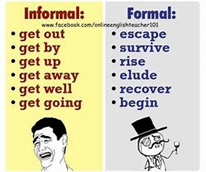
  • The use of language,
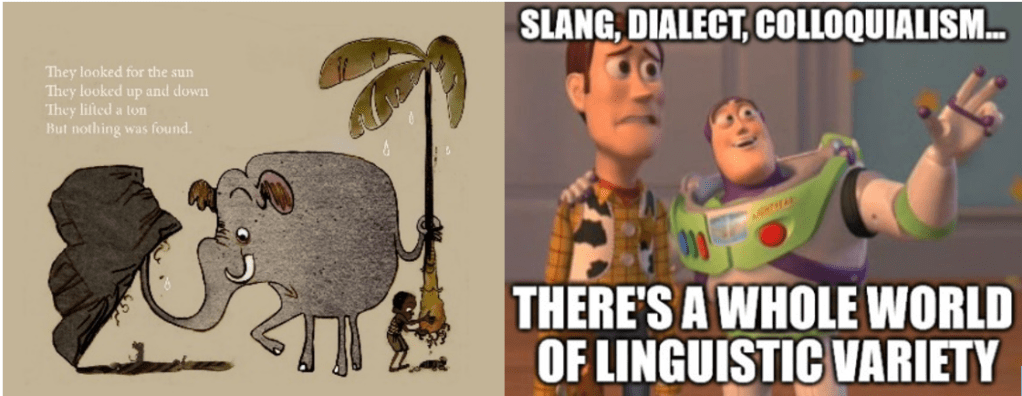
    • does it use Standard English, slang or dialect?
  • The use of personal pronouns    
    • “we”, “our”, “I” and “you” includes the reader and invites them to agree with the writer.
  • How the layout supports the purpose of the text and focuses the attention of the audience.
    • Eg subheadings signal what each section is about.

An example to discuss:

Questions to ask:

  1. What is the purpose of this text?
  2. Who is the intended audience?
  3. What gives you that impression?

Example 2:

Shrek
  1. What is the purpose of this text?
  2. Who is the intended audience?
  3. What gives you that impression?
Simpsons
  1. What is the purpose of this text?
  2. Who is the intended audience?
  3. What gives you that impression?

Your Task:

Analyse the choice of target audience in at least 3 texts. To do this, answer the 3 questions, as we did for the examples. You may use the following 3 texts or choose your own.

Stranger Things
  1. What is the purpose of this text?
  2. Who is the intended audience?
  3. What gives you that impression?

  1. What is the purpose of this text?
  2. Who is the intended audience?
  3. What gives you that impression?
  1. What is the purpose of this text?
  2. Who is the intended audience?
  3. What gives you that impression?

Achievment Standard:

Y8: They listen for and identify different emphases in texts, using that understanding to elaborate on discussions.

Y9: They listen for ways texts position an audience.

Y10: They listen for ways features within texts can be manipulated to achieve particular effects

Term 1 English Summary

Well done everyone for getting to the end of Term One!!!

Video Lesson Week 10 English

See the source image

This week is a review of content to ensure you have met the achievement standards and are able to catch up on any missed work.

Achievement Standards we worked towards:

Year 9:

1. Students analyse the ways that text structures can be manipulated for effect

2. Students analyse and explain how images, vocabulary choices and language features distinguish the work of individual authors

3. Students create texts that respond to issues, interpreting and integrating ideas from other texts

4. Students make presentations and contribute actively to class and group discussions, comparing and evaluating responses to ideas and issues

5. Students edit for effect, selecting vocabulary and grammar that contribute to the precision and persuasiveness of texts and using accurate spelling and punctuation.

Year 10:

1. Students evaluate how text structures can be used in innovative ways by different authors

2. Students explain how the choice of language features, images and vocabulary contributes to the development of individual style

3. Students create a wide range of texts to articulate complex ideas

4. Students make presentations and contribute actively to class and group discussions, building on others’ ideas, solving problems, justifying opinions and developing and expanding arguments

5. Students demonstrate understanding of grammar, vary vocabulary choices for impact, and accurately use spelling and punctuation when creating and editing texts.

Where to find the work and submit?

All work completed can be found here on the Muliyan Blog. It can also be found here, on the Muliyan Notebook. If you have any difficulty at all, please let us know and we can either email you a copy or provide a hard copy for you.

To submit, you may complete work on the Muliyan Notebook (all work completed so far in class has been scanned and included your folder on the Notebook), you can email it or complete in hardcopy and give to Matt to pass on to Joe and Myself.

What work was relevant to each standard?

number1

Number 1. Was covered in all the work done on text and structure. If you use the following links and have completed each of the 3 tasks, and continue working on the 4th, you will have achieved this standard.

See the source image

Number 2. was covered in the work we completed on style. There were 3 tasks to complete.

  • Artists Styles (Choose or create art and explain how choices set it apart and show individual style)
  • Words with Style (Choose or create a piece of writing and explain how choices set it apart and show individual style)
  • Contributing to the message (Question and answer on analysing video presentation/news)
See the source image

Number 3. was covered in all the work where we asked you to create something. There were 5 tasks relevant to this standards. 4 of the tasks are from previous achievement standards, so if you complete the work above you have complete these 3! These 3 were:

The 4th task is:

day4
63ac43d64175ea5318660196bf16c54e

Number 4 and 5: These standards are ongoing. To demonstrate these you need to:

  • Be involved in class discussions, share ideas, answer questions, listen to others.
  • Edit and refine your work. Proofread it, check it over to allow you to improve it.

This information is also available on this document and the OneNote Notebook.

See the source image

Your task is to

  • ensure your work is up to date,
  • complete any work you missed
  • submit any work not previously submitted and completed.

Remember: We are here to help!!!!!     If you missed a class and do not understand let us know so we can go through this with you one-on-one or if you would prefer we can record a lesson on it and send it to you.

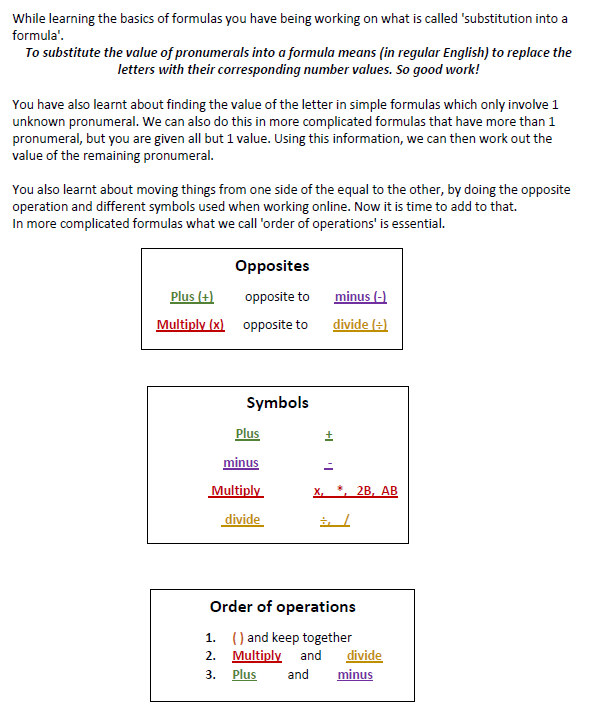
Basics of Formula 2

Periscope recorded lesson:

https://www.pscp.tv/w/cVO9dzFWR1F2eW5lTkxQRU98MUJSSmpRV2FnT2FHd0eNcqMNicqlQAxr4_NfpEvjUdyBX1r4u2xPLWgQ8ETn

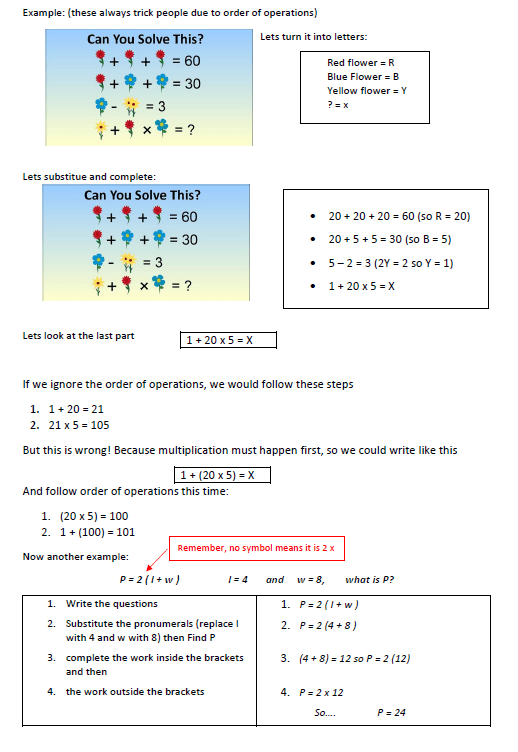
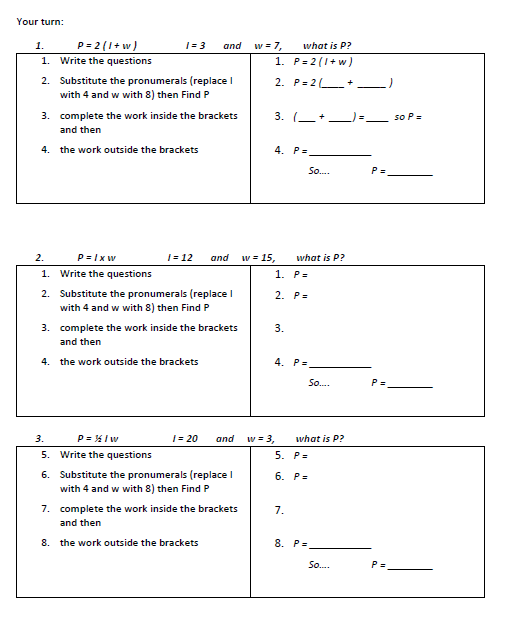
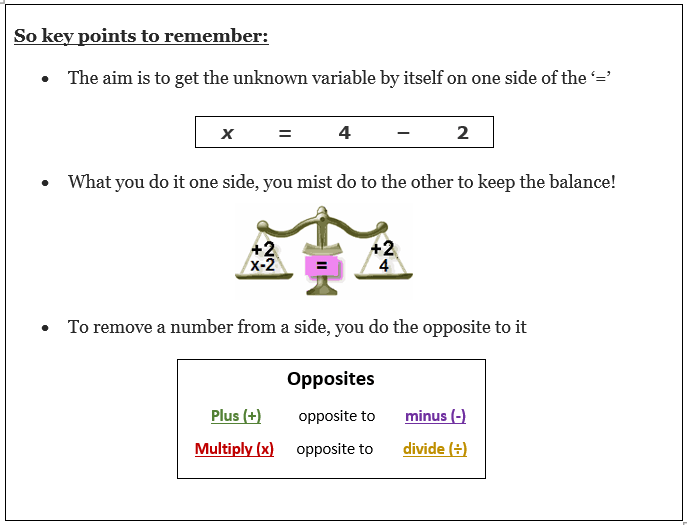
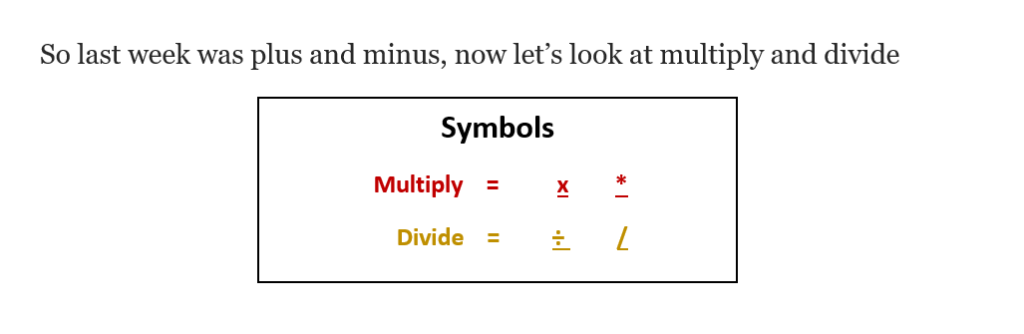
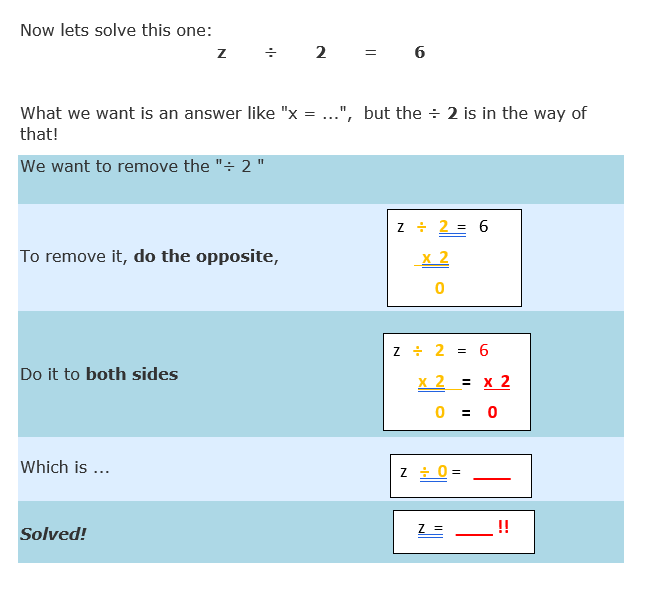
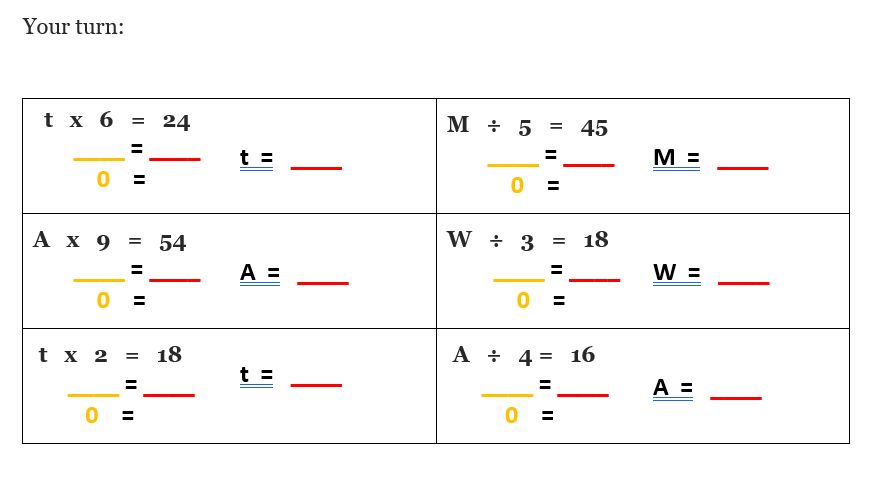
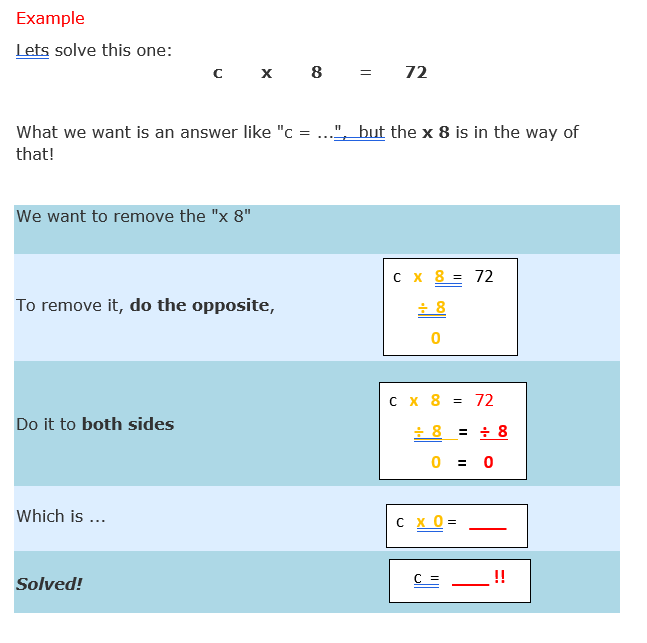
Remember last week we looked at the basics of finding an ‘unknown variable’, replacing this unknown with a letter.

If you missed last week, please complete that work first as todays work is building on from plus/minus to multiply/divide to find the unknown variable.

Week 8 work is here: https://muliyanlearningacademy.school.blog/2020/03/23/basics-of-the-formula/


Primary and Secondary Sources

Academic standard

  • Year 9: Students interpret, process, analyse and organise information from a range of primary and secondary sources and use it as evidence to answer inquiry questions. 
  • Year 10: Students process, analyse and synthesise information from a range of primary and secondary sources and use it as evidence to answer inquiry questions. 

https://drive.google.com/open?id=17KxUaJjS-NaXPkysxw6lGzySqSO2M9P-

What does that mean? 

In everyday words

Primary sources are sources that were written by a person experiencing the event or time or artefacts found from an event or time.

Secondary sources are sources that are, generally, written after the event/time and uses knowledge of primary sources to analyse or document the time/event.

Let’s talk

But what does this mean and how can we link this to an inquiry question? 

Let’s use the lense of Medival Combat. Here is my inquiry question: Is medieval combat accurately portrayed in media? 

To understand this, we need to know how did medieval knights fight, how do we know (primary sources), and what analysis has been done (secondary sources)? 

We know a lot about how medieval knights fought; they wrote books on the topic. Were you surprised? I was. 

The following discussion is based on the works of Fiore De’i Liberi. Fiore was a knight in the late 14th to early 15th centuries. He was a mercenary fencing master who was either a low tier of nobility or a member of the imperial free knights. 

Fiore wrote several manuals but a basic cover of them can be found here. 

https://wiktenauer.com/wiki/Fiore_de%27i_Liberi

Fiore documented his fighting style himself. The significant sections of work consist of grappling, dagger, the sword in one hand, the sword in two hands, the sword in armour, the poleaxe, spear, and mounted combat. 

Below is a page from his final body of work known today as Pisani Dossi MS but their names are all Flos Duellatorum “The Flower of Battle”. 

Pisani-Dossi MS 25b

The top left panel is translated as: Here the sword will shift into a Malignant Position by penetrating; Now I cover with my arm, for I hold my limb strongly upright.

The top right panel: I am the Position consecrated as the True Cross by many masters.

The point is not a nuisance to me, nor will the cutting edge harm.

Bottom left: By using this covering, you would now be sure to repel whomsoever, Just as you will see the students play at any time.

Bottom right: I would do other plays if ever it will be pleasing; This point escapes from the deepest covering of the master.

Very poetic, I suppose, but is it easy to understand? 

We can connect the dots by looking at other references written by Fiore (the author). 

MS M.383, MS Ludwig XV 13, and Pisani Dossi MS

Top left: The Archer’s Stance, by this name I am called. Great thrusts I give while stepping out of the way. And if you come against me with a blow of the edge, I make a good cover and quickly I strike my counter. This is my art and it does not change.

Top right: Of the True Cross I am the Bastard Stance (Posta di Crose Bastarda); that which she can do, I also choose to do. For my strategy, I make good covers, thrusts, and cuts, always while voiding blows out of the way, and with my blows, I make my greatest bargain

Bottom left: I come with this cover from the Stance of the True Cross, stepping out of the way to the side. And you will see what I can do from this cover; through my Scholars, I can show it, because they make my complimentary plays (those that are for combat to the death). The art they will show without a doubt.

Bottom right: I am the first Scholar of the Master that came before me, and I make this thrust because it is from his cover. Also, I say that this thrust could quickly be made from the Stance of the True Cross and from the Stance of the Bastard Cross, and I say that immediately as the player throws a thrust to the Master (or Scholar) who was in the aforesaid guards (or stances), the Master (or Scholar) should move lower with his body and step out of the way, crossing the way and thrusting upwards to his face or chest (the cross of the sword held low) as is depicted here.

Still very flowery, but a lot more descriptive. Do you think that you could describe how these guards looked and how they would be used in combat with any accuracy? 

Secondary sources: 

I think it’s hard for us, as modern people, to understand what Fiore meant and how these blows could be interpreted. 

Let’s see how professional instructors try to describe the various guards of Fiore: 

Do you feel that Guy Windsor has nailed it? Do you think it would work? 

How do you feel about Matt Easten’s interpretation shapes up? 

Do you notice any difference between the two instructions? If so, what? Leave a comment! 

Is Nicola Gasperet’s demonstration better or worse than the above? 

Akademia Szermierzy changes from being instructional pace to full pace. How do you feel their techniques are holding up? 

Practice makes perfect

Your task: Find a question that relates to your passion project or some ideas I’ll include below, and find some primary sources, and then some secondary sources that provide more analysis about them. 

Find at least one primary source about that question and at least two secondary sources that talk about that primary source. 

Some ideas: 

  • What is it about Wet Markets that make them a cause for concern for medical experts? 
  • Who had more British Convicts send to them, Australia or North America? 
  • How did the first people feel about the British showing up? 
  • Something from your passion project. 

Year 9 students must achieve developing and year 10 students must achieve approaching mastery to be complete. 

How will you know when you are done

Developing: A learner who is still developing an understanding of primary and secondary sources will be able to show evidence that they recall that primary sources are original sources. Things that are directly written about by a person or artefacts discovered from the time period. Furthermore, they will be able to show that secondary sources are analysis or combinational work created by others about primary sources (often many).  

However, the depth of evidence provide could be tangental or barely relevant to the inquiry question. 

Approaching: 

Students that are approaching mastery of a topic show that they can apply concepts of sourcing primary and secondary sources. Students will demonstrate this by providing evidence showing how they made decisions on how to choose why an article was primary or secondary and go beyond simple recalling of information. An example of student evidence would be work that clearly contains primary and secondary sources that provide context to the selected inquiry question. 

Acquiring

Students who are acquiring mastery must be able to show detailed evidence of how their primary and secondary sources are appropriate selections. An example of student evidence would go beyond work that clearly contains primary and secondary sources but would come with evidence that argues why the sources are good sources. 
Mastering:

Mastering primary and secondary sources would require the student to produce primary and secondary sources and create their own forms of secondary sources from primary evidence that they have sourced themselves. 
Wellbeing

Hey there Muliyan crew,

Wowzah! What a week hey?! Can you believe what is going down in this little world of ours? I promise not to take up too much of your time, but I did want to check in with you all. Would you believe me if I told you that I miss you already? Well its true- there is no one at my home making me giggle quite like you lot. I miss your funny stories, watching you harness your negotiation skills 😉, learning about your passion projects (especially the ones about fashion), and seeing your faces- especially after you had completed some good work in class!

You’re probably missing me too- (hee-hee XD), and not just because I make a mean hot chocolate?! I want to reassure you that I am taking good care of myself. I am doing things like this:

So, a couple of weeks ago I started to have chats about wellbeing and having some bigger conversations about this in the classroom. As that plan has sadly changed; I’m going to start putting up some information and check-ins via the Muliyan blog…. I’d love to know if there are any topics you want me to cover, so please feel free to send me any suggestions!

I’ll try to pop some info up regularly, but for now, given I think the best thing to come out of this whole COVID-19 thing is the memes; would you care to share some of your favourite ones with me?? Seriously… its one of the things keeping me sane, and I’d love to see if you have created or found anymore since last time!

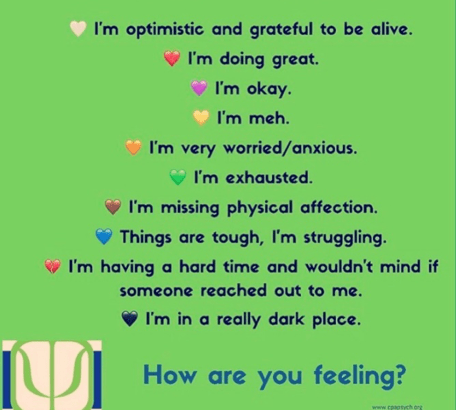
I know that Matt is checking in with you all often, and you are absolutely welcome to let him know if you need any extra support or help from us- including a chat with me. If you’re not in a chatty mood that’s totally fine- perhaps you could just send him a reply like one of the ones below:

If you are online and want to check out some other resources with tips and tricks to stay sane during this time you could check out:

https://www.lifeinmindaustralia.com.au/support-for-those-impacted-by-adverse-events/mental-health-support-for-covid-19

On this page you can access information and contacts for a range of different websites and resources about keeping well during this time.

Finally, just to be sure, if you need to chat with someone and we are not at work, the numbers below are some other people you can check in with.

The below support lines are available 24/7 if you need to talk;

  • Lifeline: 13 11 14
  • Beyond Blue: 1300 22 4636
  • Kids Helpline: 1800 55 1800
  • MensLine: 1300 78 99 78
  • Suicide Call Back Service: 1300 659 467

Just quickly before I go, I just wanted to let you know that I think you are all rock stars, and that we are going to get through these most interesting of times. Remember to take very good care of yourselves, and make sure to do all of the things that you know work for you and that help you to feel good. Chocolate and puppy-snuggles are at the top of my list.  

Chat soon,

Tish 😊

Structure and the time

Periscope video lesson found here:

https://www.pscp.tv/w/cVEaUTFWR1F2eW5lTkxQRU98MVlwS2tRZEVacllKaknaMmZBgcRyLNjaPjKj-jbLYy_pIM4Soa8Yff1-8Jfn

Achievement standards

Year 9: In creating texts, students demonstrate how manipulating language features and images can create innovative texts. Students create texts that respond to issues, interpreting and integrating ideas from other texts.

Year 10: They develop their own style by experimenting with language features, stylistic devices, text structures and images. Students create a wide range of texts to articulate complex ideas.

So….

Last week we reviewed structure and you identified the different structure of some texts. This week you will be creating a text with structure.

We are living in changing times. It is important to document these times and could be interesting to review in the future once it is all over. We all have a unique perspective right now and I would love to hear yours!

This will be an ongoing project for the duration of the pandemic. I will be checking in regularly to see how you are going.

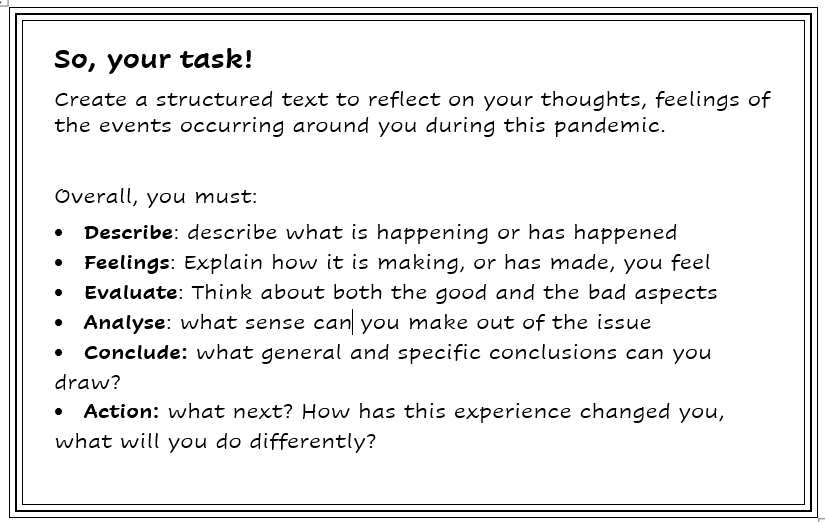
So, you are going to document what is happening around you and for you during this unique and challenging experience.

You can do this through:

  • A Diary
  • A series of letters
  • A VLOG
  • A BLOG
  • A series of News Articles
  • ANYTHING!!

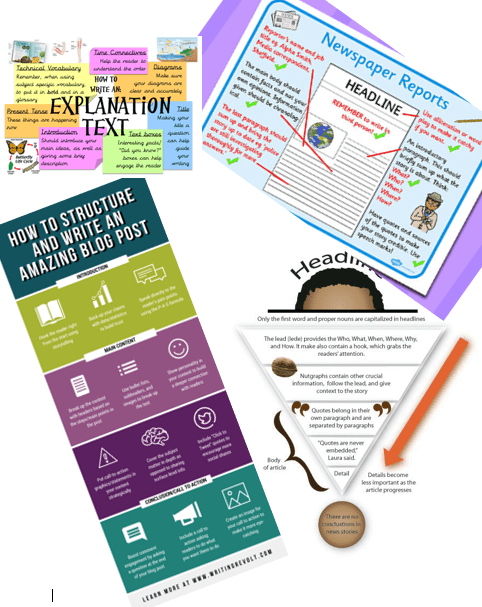
Remember, with all writing you need to have a clear structure and to PLAN your work!! You may use ideas form the structures below and come up with your own unique style and structure or follow a structure closely.

Things your writing needs:

  • It must be a reflective piece of writing!
  • a structure
  • a plan
  • Possibly some Visuals
  • Your thoughts
  • Your feelings
  • Facts
  • Events
  • Be ongoing to create a larger text made up of smaller ones.

So, lets come up with some ideas:

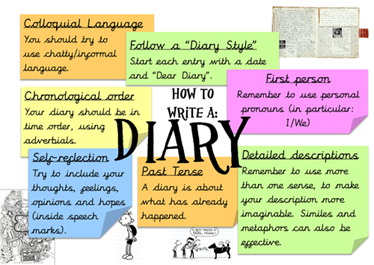
A diary:

  • A diary is a text you write each day to document what has happened and your thought and feelings

Structure to a diary:

  • The purpose of a diary is to document your thoughts and feeling, for yourself. You could write a diary (by hand or typed) or create a video diary or a voice memo diary!
  • You don’t need to capture attention, so your heading is just the date, and your entries are in chronological order (by date)
  • This is informal, no need for formal language
  • Structure is simple
    • What happened? (simple past tense)
    • How do you feel? (simple present tense)

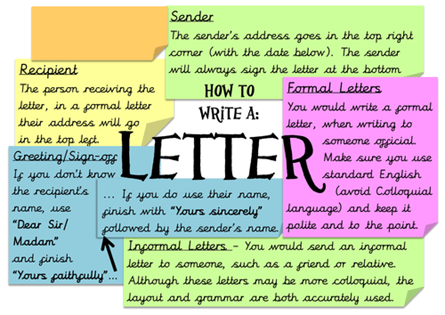
Letters

  • A letter is something you write from yourself to someone else

Structure of a letter

  • The purpose of a letter is to inform someone of things that are happening or an issue. You could type a formal style letter, write it by hand or even just write emails.
  • Again, you don’t need to capture attention but your heading will be the recipient (the person receiving the letter), if an email you would also have a subject line which could be the date or a statement of the topic.
  • You could write these daily, weekly or a summative letter at the end of the pandemic (as long as you take nots on your thoughts, feelings and experiences throughout).
  • This can be formal or informal depending on who you are writing to. You could write to your future self, or to me. You do not have to actually send these letters if you address to someone else and that person can be made up.

Design a site like this with WordPress.com
Get started